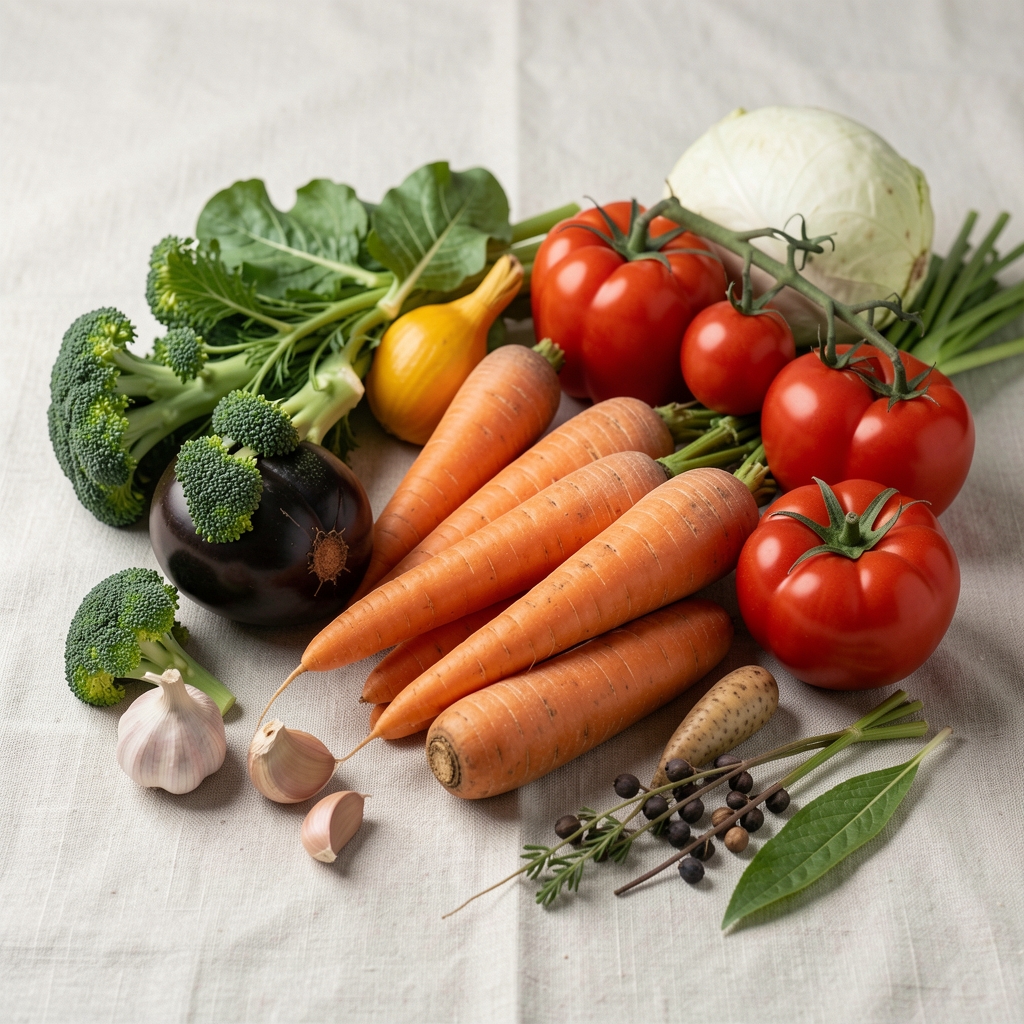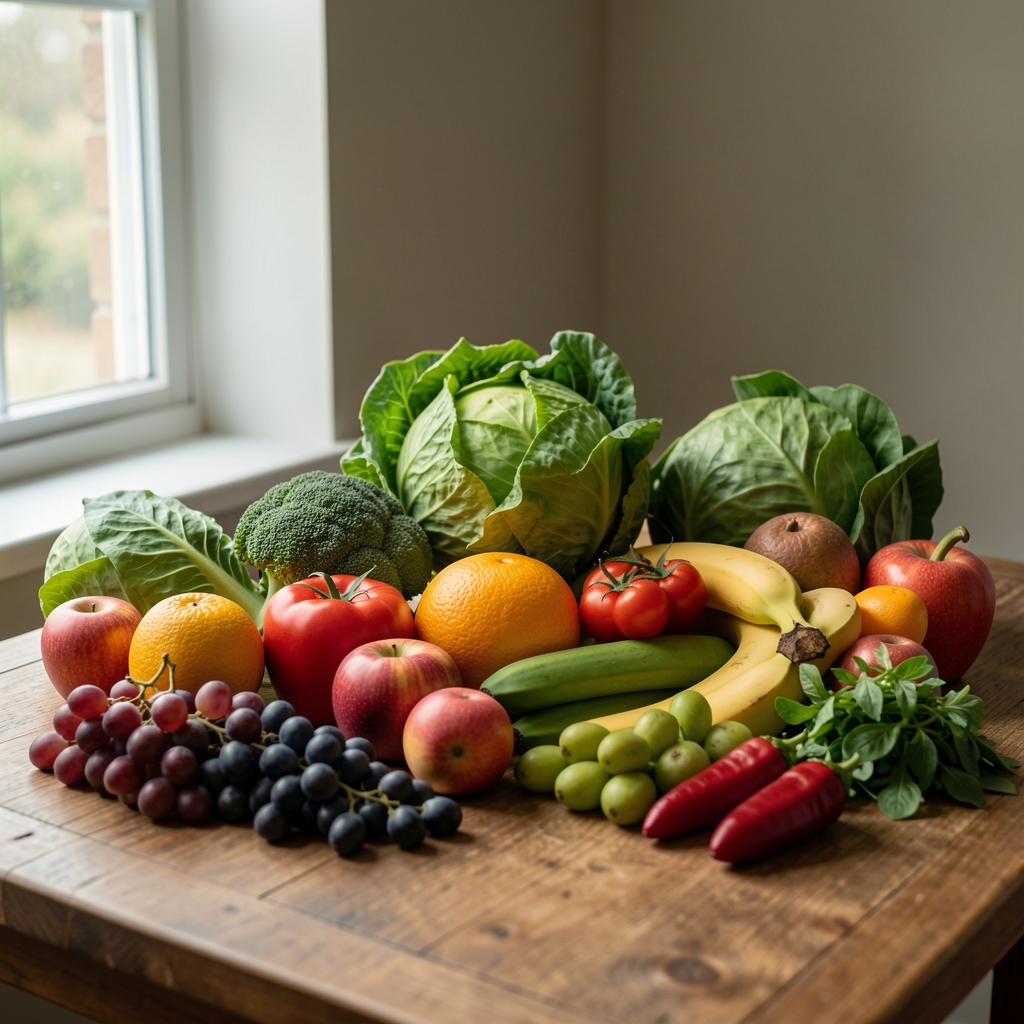
The calendar and the plate have been in conversation for as long as people have grown food. What surprises, in the context of a detailed nutrition journal, is how clearly this conversation persists in a contemporary urban context — and how much it influences not just what ends up on the plate, but the entire rhythm of a week's eating.
What the Field Journal Shows Across Seasons
The field record maintained across this publication's editorial cycle spans three full years and four seasonal rotations. Within that data, one of the most consistent patterns is the correlation between seasonal produce availability and the volume of vegetables and fruit appearing in the weekly record. This is partly logistical: in-season produce is more widely available, less expensive, and often requires less preparation than out-of-season equivalents. But the journal suggests something more than convenience.
During months when a particular vegetable or fruit is at peak availability — the concentrated squash and root-vegetable months of October through January in an English context, or the tomato and courgette months of July and August — the variety and volume of plant-based food in the week's record increases measurably. Not because of any deliberate dietary decision, but because the produce itself is more present: at the market, in the weekly box, at the discounted end of a supermarket display. What is proximate gets eaten. What is eaten shapes the week.
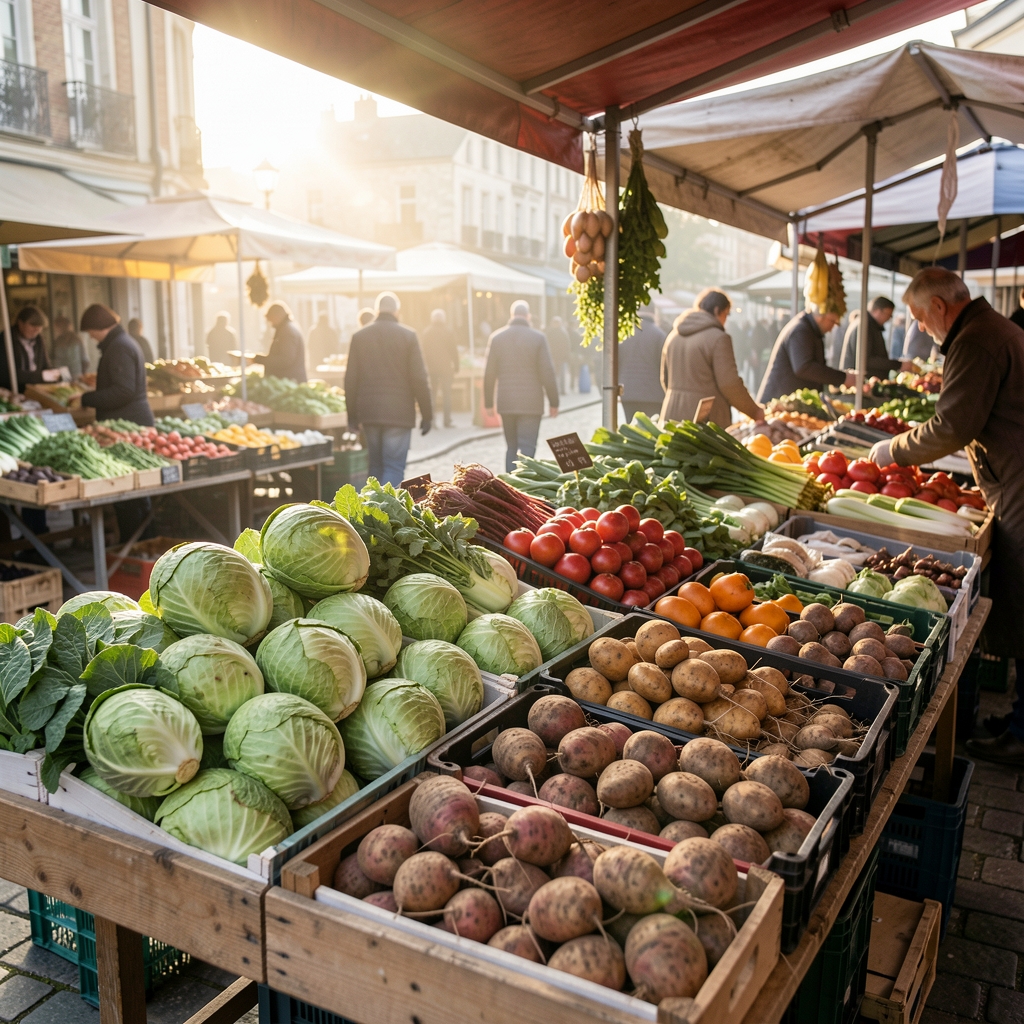
Market produce, early morning — field record, February 2026.
Nutritional Variety and the Seasonal Cycle
Nutritional variety — the distribution of different plant foods, colour groups, and fibre sources across a week — is one of the more reliable indicators of diet quality in the nutritional literature. It appears across multiple frameworks: Mediterranean, plant-forward, and more broadly evidence-informed approaches to eating all emphasise variety as a component of nutritional balance.
The seasonal cycle provides this variety naturally, without requiring active curation. The person who eats with the seasons rotates through a substantially different set of plant foods across the year than the person who eats from a fixed repertoire — not because they are following a protocol, but because the available options change. The winter root vegetable months introduce a different fibre profile, a different micronutrient distribution, and a different cooking register than the summer salad months. The body encounters a different range of inputs.
This is not to argue that seasonal eating is inherently superior in every measurable dimension — a diet that includes frozen vegetables year-round will preserve significant nutritional content. The argument is more modest: that aligning food purchases with seasonal availability is a low-effort way of introducing variety, and that variety itself has a consistent record in the nutritional literature as a positive variable.
Plant-Based Meals as a Seasonal Default
One of the more interesting patterns in the field journal concerns the relationship between seasonal produce and the frequency of plant-based meals. The journal does not record a deliberate decision to eat more plant-based food in any given season. What it records is that, during months of high produce availability, the meals that get assembled from available ingredients — without advance planning — are more frequently plant-based.
A practical example from the record: during the spring months, when asparagus, spring onions, peas, and broad beans are all simultaneously available at reasonable prices, a weekday lunch assembled from what is present in the kitchen has a high probability of being plant-based by default. The same logic applies to the tomato and pepper months of late summer. The plate fills from the bottom — from what is there — and in months of high produce abundance, what is there is predominantly vegetables.
"The plate fills from the bottom. In months of produce abundance, the question of what to eat resolves itself before it becomes a question."
This pattern has weight implications. Plant-based meals that derive their volume primarily from vegetables and legumes tend to provide greater satiety relative to caloric density than meals centred on animal proteins or refined carbohydrates. The fibre content of a meal built around seasonal legumes and vegetables supports a sense of fullness between meals without the caloric overhead of more energy-dense alternatives. This is an observation consistent with the nutritional literature, not a directive.
The Weekly Food Rhythm and Seasonal Shopping
There is a practical dimension to seasonal eating that receives less attention than its nutritional or environmental dimensions: its effect on the rhythm of the shopping week. Shoppers who organise their weekly food purchase around what is available rather than a fixed list tend to engage more actively with the produce at the point of purchase. This is a trivial observation until one considers its downstream effects.
The journal records, consistently across several years, that weeks in which the primary food purchase was made from a market or greengrocer — rather than from a fixed online order — showed higher vegetable variety in the week's cooking record. The act of physical selection, the visual encounter with produce in season, appears to influence what ends up in the basket. It is one of the more concrete arguments for maintaining a regular contact with seasonal produce: not because markets are inherently superior to supermarkets, but because the decision-making process they require tends to produce more varied outcomes.
The counterargument — that planning and fixed shopping removes decision fatigue and produces more consistent outcomes — is also reflected in the journal. Weeks with a more deliberate approach to food purchasing show more consistent protein and complex carbohydrate intake. The seasonal approach excels in vegetable variety; the planned approach excels in structural balance. The field notes suggest that the most effective eating weeks combine both: a structured core supplemented by seasonal produce as it appears.
Gradual Weight Change and the Seasonal Food Cycle
Weight in the field journal shows a slow, rhythmic variation across the year that broadly correlates with seasonal eating patterns. The months of highest plant-based food variety — late spring through summer — show slightly lower weight readings than the late winter months, when produce variety narrows and the cooking register shifts toward more energy-dense preparations. The difference is not dramatic, and it would be overstating the data to frame it as a seasonal weight-loss effect.
What the pattern suggests, more conservatively, is that gradual weight change in either direction can often be traced to the structural background of what is available to eat rather than to deliberate dietary choices. The months of high produce abundance naturally introduce more volume and fibre at lower caloric density. The winter months naturally introduce heavier meals and higher reliance on stored ingredients with less variety. Neither pattern is a problem — both are normal — but being aware of them as seasonal background conditions makes the eating record easier to interpret.
For someone interested in weight awareness without the overhead of continuous monitoring, the seasonal framework offers one practical handle: paying closer attention to vegetable and fruit intake in the lower-variety months, when the natural default drifts toward more energy-dense ingredients. This is less a restriction than a rebalancing — one that the season's produce itself makes available, if the purchasing habit supports it.
- Seasonal availability is a low-effort driver of nutritional variety — what is proximate gets eaten.
- Months of high produce abundance naturally increase plant-based meal frequency without deliberate dietary decisions.
- Plant-based meals built from seasonal vegetables and legumes support a sense of fullness between meals relative to their caloric content.
- Seasonal shopping — particularly from markets or greengrocers — produces higher weekly vegetable variety in the field record.
- The most effective eating weeks combine structural planning with seasonal availability: a core of prepared staples supplemented by whatever the season offers.